September 28, 2026
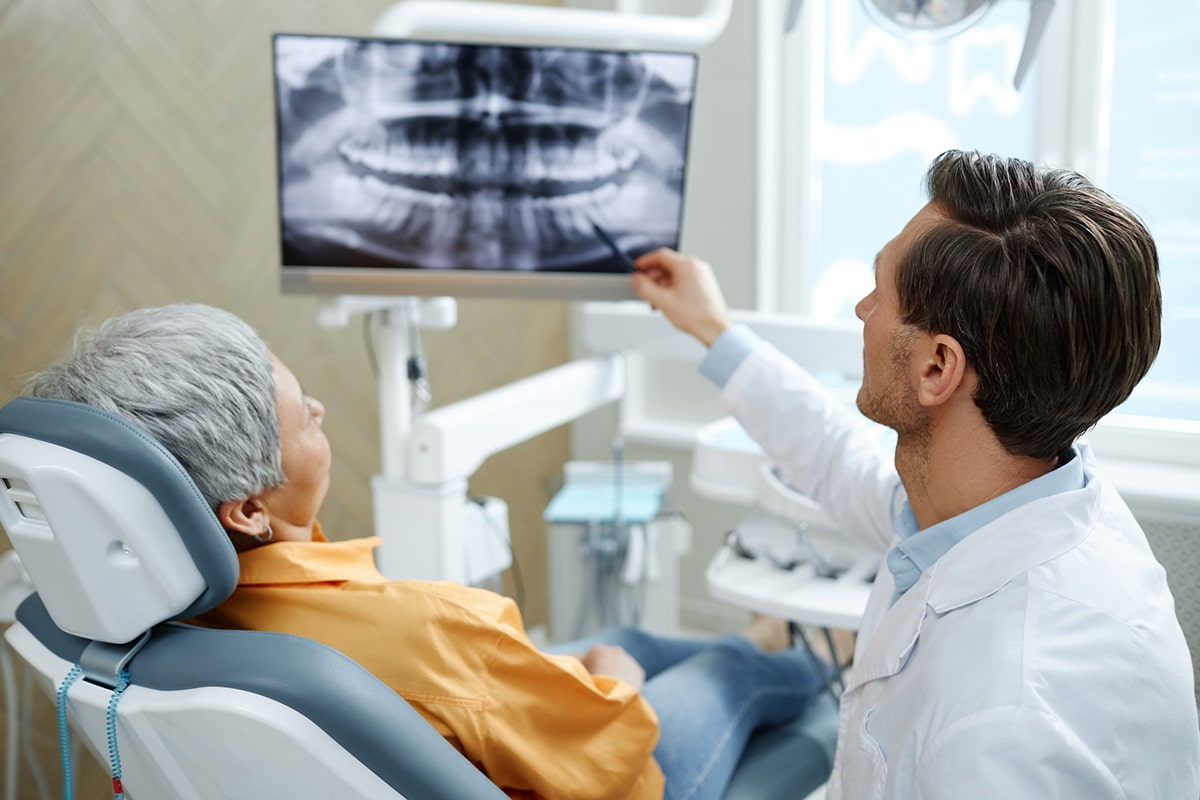
The word “radiation” can sound concerning, especially when it comes up during a dental appointment. However, radiation is not limited to medical or dental imaging. We are exposed to small amounts of radiation every day from natural sources in our environment, from the ground beneath us to cosmic radiation that reaches Earth from space. Understanding these everyday exposures can help put dental X-rays into perspective.
At Jupiter Smiles Dentistry, we use modern dental technology as part of our commitment to thorough, individualized care. Our preventive dentistry services include low-radiation digital imaging, which can help us identify dental concerns that may not be visible during a standard visual examination. Our office also has 3D X-ray technology that can be used for precise treatment planning when appropriate.
What Is Radiation?
Radiation is energy that travels through space or matter. It exists in several forms, and people encounter it naturally throughout their lives. When discussing dental X-rays, we are specifically talking about ionizing radiation. This form of radiation has enough energy to pass through the body and create images of structures that cannot be fully evaluated by sight alone.
Radiation exposure is commonly measured in units called sieverts. Because the amounts associated with routine diagnostic imaging are generally small, they are often discussed in microsieverts, or millionths of a sievert.
An important point to remember is that radiation exposure is not automatically the same thing as radiation danger. The amount of exposure matters. Frequency matters as well. Dental professionals consider these factors when determining whether diagnostic imaging is appropriate for an individual patient.
At Jupiter Smiles Dentistry, our approach centers on comprehensive examinations and personalized treatment planning rather than treating every patient exactly the same way. Our goal is to gather the information necessary to understand a patient's oral health and recommend appropriate care. The practice describes its approach as relationship-based, values-driven, and focused on thorough evaluations supported by modern technology.
How Does Dental X-Ray Radiation Compare to Everyday Exposure?
One of the easiest ways to understand radiation from dental imaging is to compare it with radiation we encounter as part of ordinary life.
Everyone receives what is known as background radiation. It comes from naturally occurring radioactive materials in soil and rocks, cosmic radiation from space, and other environmental sources. Simply living on Earth means being exposed to a small amount of radiation each day.
Air travel is another familiar example. At higher altitudes, there is less atmosphere between passengers and cosmic radiation from space. As a result, flying in an airplane temporarily increases exposure compared with remaining at ground level. The exact amount varies according to factors such as altitude, flight duration, and route.
Even where you live can affect your natural background exposure. Elevation, geology, building materials, and other environmental factors can influence the amount a person encounters over time.
Dental X-rays also vary in radiation exposure depending on the type of image being taken. A small digital dental X-ray is different from a panoramic image, while a 3D scan collects considerably more information and may involve a different level of exposure. For that reason, there is no single radiation number that accurately describes every dental X-ray.
A useful way to think about these comparisons is:
- Natural background radiation: Exposure occurs every day simply by living in our environment.
- Air travel: Flying exposes passengers to additional cosmic radiation, with longer and higher-altitude flights generally resulting in greater exposure.
- Dental X-rays: Modern digital dental imaging typically involves small, controlled exposures designed to provide diagnostic information.
- 3D dental imaging: A 3D scan can provide much more detailed information than a standard dental X-ray, so its exposure differs depending on the machine, scan area, and settings being used.
Rather than focusing on radiation as something that exists only inside a dental or medical office, it can be more helpful to think of exposure as something we experience in varying amounts throughout everyday life.
Why Dental X-Rays Can Be an Important Part of Your Examination
If we can see your teeth during an examination, why do we sometimes need X-rays?
A visual examination provides valuable information, but it cannot show us everything happening beneath the surface. Dental imaging gives us another perspective and may reveal problems in areas that are difficult or impossible to evaluate visually.
The preventive dentistry information from Jupiter Smiles Dentistry explains that low-radiation digital imaging can help provide a more complete examination. These images may assist the dentist in detecting cavities, concerns involving existing restorations, gum or bone recession, and other abnormal conditions involving the mouth, head, or neck.
This information can be especially valuable because some dental problems may develop before noticeable symptoms occur. A tooth can look relatively normal from the outside while an X-ray reveals a concern between teeth, beneath a restoration, around a root, or within the supporting bone.
Imaging may also play a role in more advanced treatment planning. Jupiter Smiles Dentistry uses a 3D X-ray machine for precise implant planning as part of its digital dentistry technology. The practice offers preventive, restorative, cosmetic, implant, endodontic, periodontal, oral surgery, full mouth reconstruction, TMJ, sleep apnea, sedation, and emergency dental services.
The type of imaging we recommend can therefore depend on what we need to evaluate. A routine examination and implant planning do not necessarily require the same type of image.
How Modern Digital Dentistry Helps Limit Unnecessary Exposure
Dental imaging has changed significantly with advances in digital technology. Digital systems allow us to collect useful diagnostic information while keeping radiation exposure in mind.
At Jupiter Smiles Dentistry, technology is part of a larger focus on thorough, comprehensive dental care. Rather than using technology simply because it is available, we use diagnostic information to help understand each patient's needs and develop an individualized treatment plan. Our website specifically identifies low-radiation digital imaging as part of comprehensive oral examinations.
We also recognize that patients may have questions about radiation, especially if they have recently received X-rays or other medical imaging. Patients should feel comfortable discussing those concerns with their dental team.
The appropriate frequency of dental imaging is not necessarily identical for everyone. Factors such as your oral health, dental history, current symptoms, existing restorations, risk of tooth decay or periodontal problems, and the treatment being considered may influence which images are useful.
That individualized approach matters. The purpose of an X-ray is not simply to take another picture. It is to obtain information that may affect diagnosis, prevention, or treatment planning.
Should You Be Concerned About Radiation From Dental X-Rays?
It is reasonable to ask questions about any procedure involving radiation. Being informed about your care is important, and we encourage patients to understand why a particular diagnostic image is being recommended.
The key is to consider radiation exposure in context. Radiation is already part of our everyday environment. Dental imaging adds exposure, but modern digital techniques are designed to provide useful diagnostic information using controlled amounts.
The potential benefit of an X-ray also matters. When an image helps identify a cavity, evaluate bone levels, examine a tooth root, assess an existing restoration, or plan treatment, it can provide information that cannot always be obtained through visual examination alone.
At Jupiter Smiles Dentistry, we emphasize comprehensive evaluations because understanding the full picture of your oral health allows us to make more informed recommendations. Our practice combines personalized care with state-of-the-art technology in a calm, welcoming environment.
If you have questions about an X-ray, ask us why we recommend it and what information we hope to gain. We want our patients to understand their treatment and feel supported throughout their dental journey.
Understanding Radiation in Perspective
Radiation may sound unfamiliar or intimidating, but exposure is already a normal part of daily life. We encounter natural background radiation from our surroundings and additional amounts from activities such as air travel. Dental imaging represents another source, but one used for a specific diagnostic purpose.
Modern digital X-rays can give us information that a visual examination alone cannot provide. At Jupiter Smiles Dentistry, we use advanced technology alongside comprehensive examinations and individualized care to better understand each patient's dental needs. If you have concerns about dental X-rays or want to know why a particular image is recommended, we encourage you to talk with us during your visit.
Frequently Asked Questions About Dental X-Rays and Radiation
Are we exposed to radiation every day?
Yes. People are naturally exposed to small amounts of background radiation from sources such as the earth, atmosphere, and cosmic radiation. The amount can vary based on factors such as location, elevation, and environment.
Do dental X-rays expose you to radiation?
Yes. Dental X-rays use ionizing radiation to create images of the teeth and surrounding structures. Modern digital dental imaging allows dentists to obtain important diagnostic information using controlled exposure.
Why do dentists take X-rays if they can already see my teeth?
A visual examination cannot reveal everything happening inside a tooth, between teeth, beneath restorations, around roots, or within the supporting bone. Dental X-rays can provide additional information that helps us perform a more complete evaluation.
Does every dental X-ray have the same radiation exposure?
No. Exposure varies depending on the type of image, equipment, settings, and area being examined. A small dental image and a 3D scan serve different purposes and should not be treated as equivalent forms of imaging.
Why might I need a 3D dental X-ray?
3D imaging can provide detailed views that may be useful for certain types of diagnosis and treatment planning. Jupiter Smiles Dentistry, for example, is equipped with a 3D X-ray machine that can be used for precise implant planning.
Can I ask my dentist whether an X-ray is necessary?
Absolutely. We encourage patients to ask questions about their care. Your dentist can explain what the recommended image is intended to evaluate and how the information may contribute to your examination or treatment planning.
At Jupiter Smiles Dentistry, we are committed to providing individualized, comprehensive dental care supported by modern technology and thorough evaluations. We work to make each visit smooth and comfortable while helping our patients understand their oral health and treatment options. Contact our Jupiter, FL office to learn more or schedule an appointment.